Agentic Systems Depend on Trust Context
The Trust Context Engine provides it.
Trust Context helps teams understand how agent behavior unfolds across the Agentic Action Path. The Trust Context Engine combines trust signals, runtime signals, and component metadata to enrich execution with identifiers, capability, and ownership across tools, MCP servers, and connected components.
This helps teams understand not just what ran, but which tools and components were involved, what they touched, and whether they should be used in production.
Trust Context is what makes agent execution easier to understand and safely run in production.
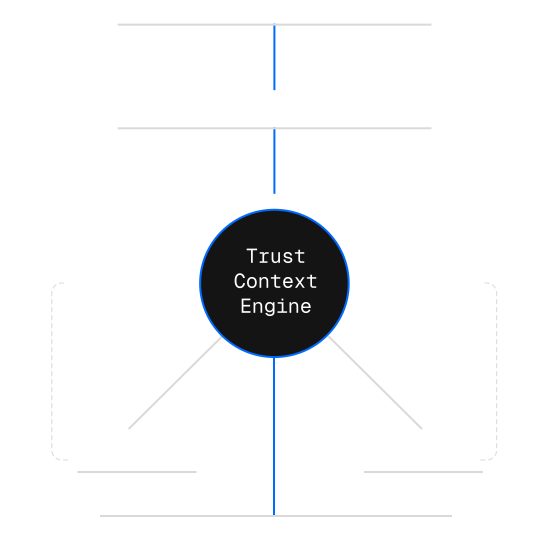
Understanding what happened requires more than logs or traces. Trust Context connects what the model decided, what tools were invoked, and what happened next across the execution path.
This gives teams a clearer way to follow behavior across tools, MCP servers, and connected components as actions propagate in real time.
That is what powers BlueRock’s observability and guardrails which helps teams move fast and safe.
Without Trust Context,
Teams Lose Visibility, Confidence and Control
Agents generate behavior dynamically across tools, MCP servers, and downstream services. Without Trust Context attached to execution, teams can’t clearly see what happened, determine which tools and components should be trusted, or guide how execution unfolds.



Key Capabilities
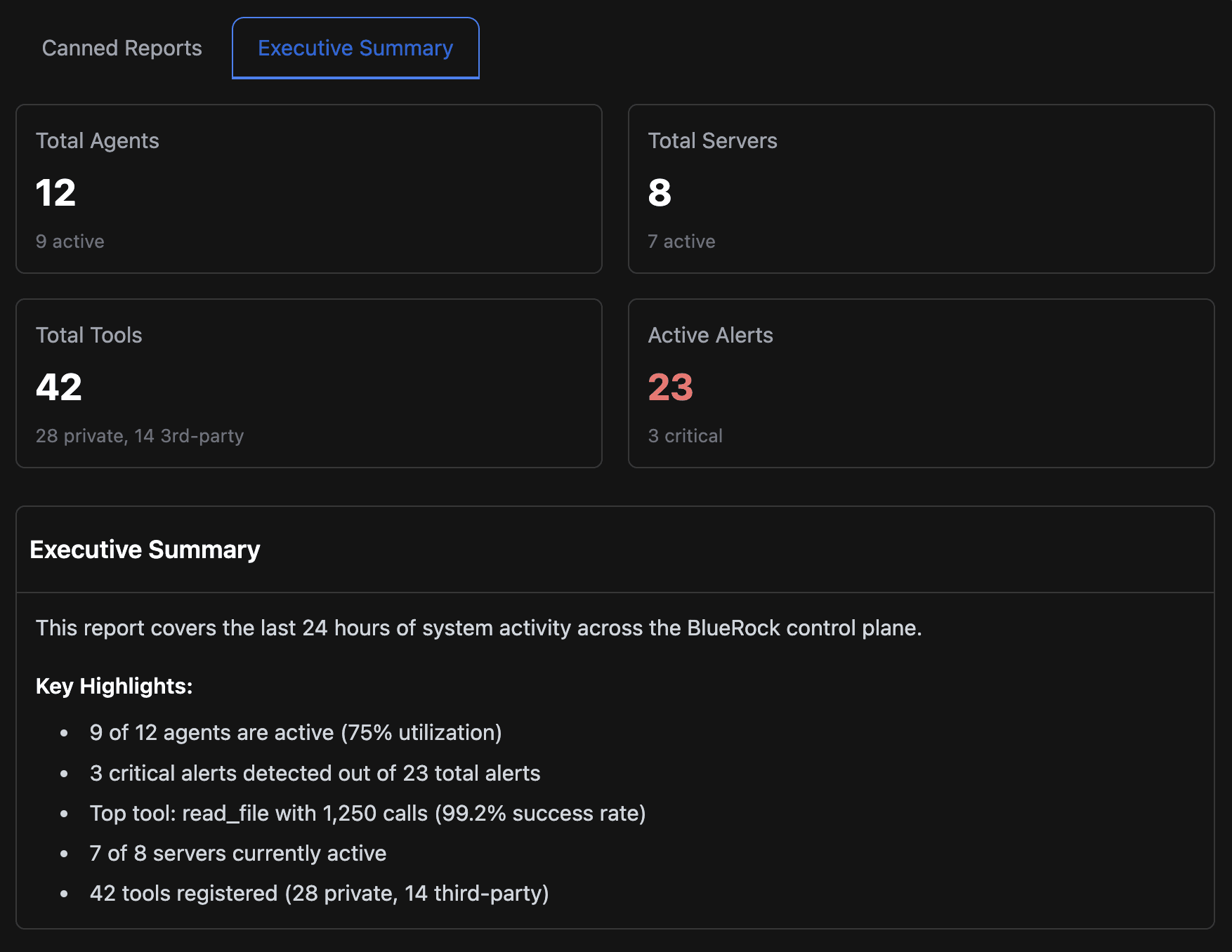
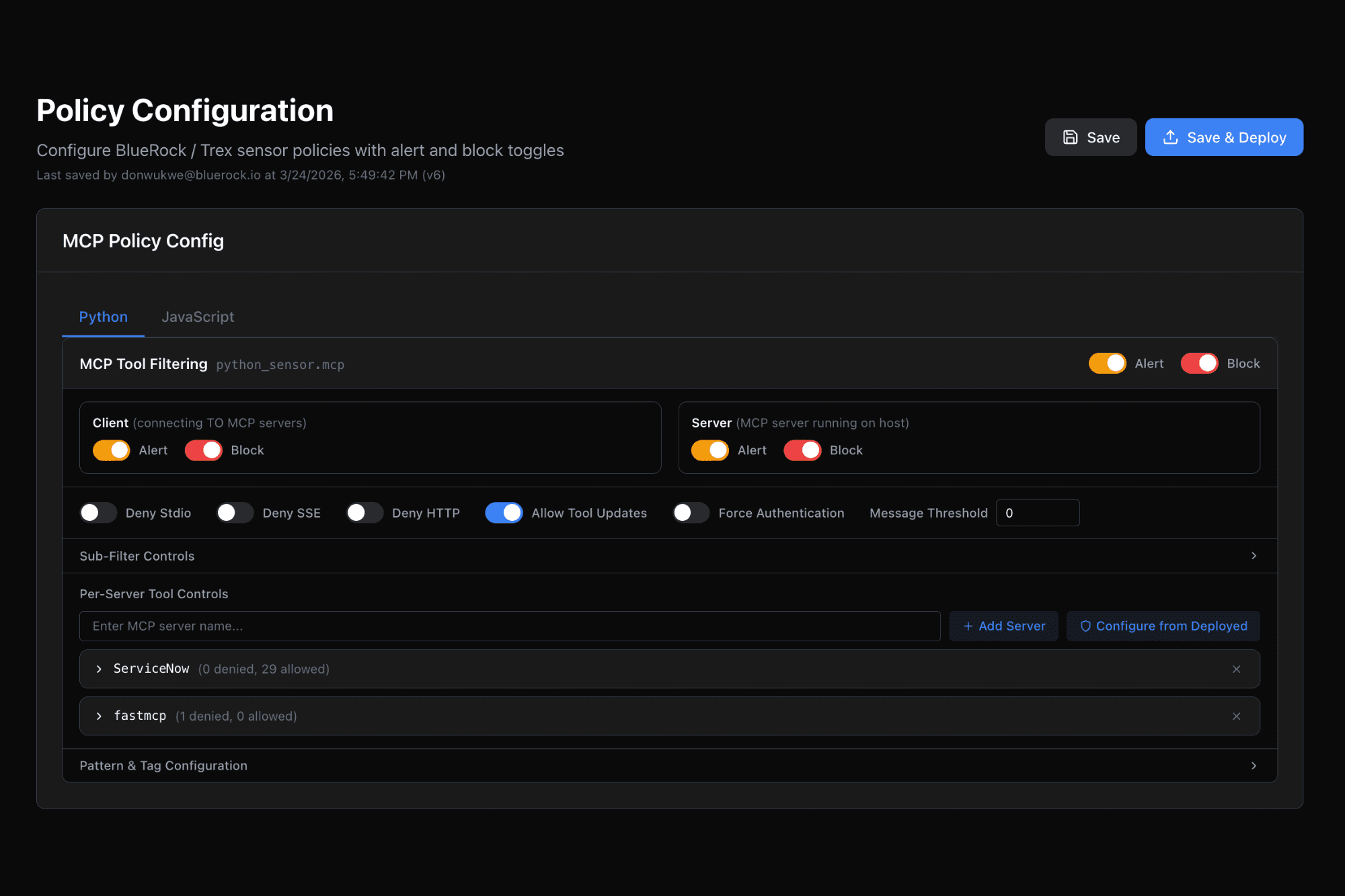
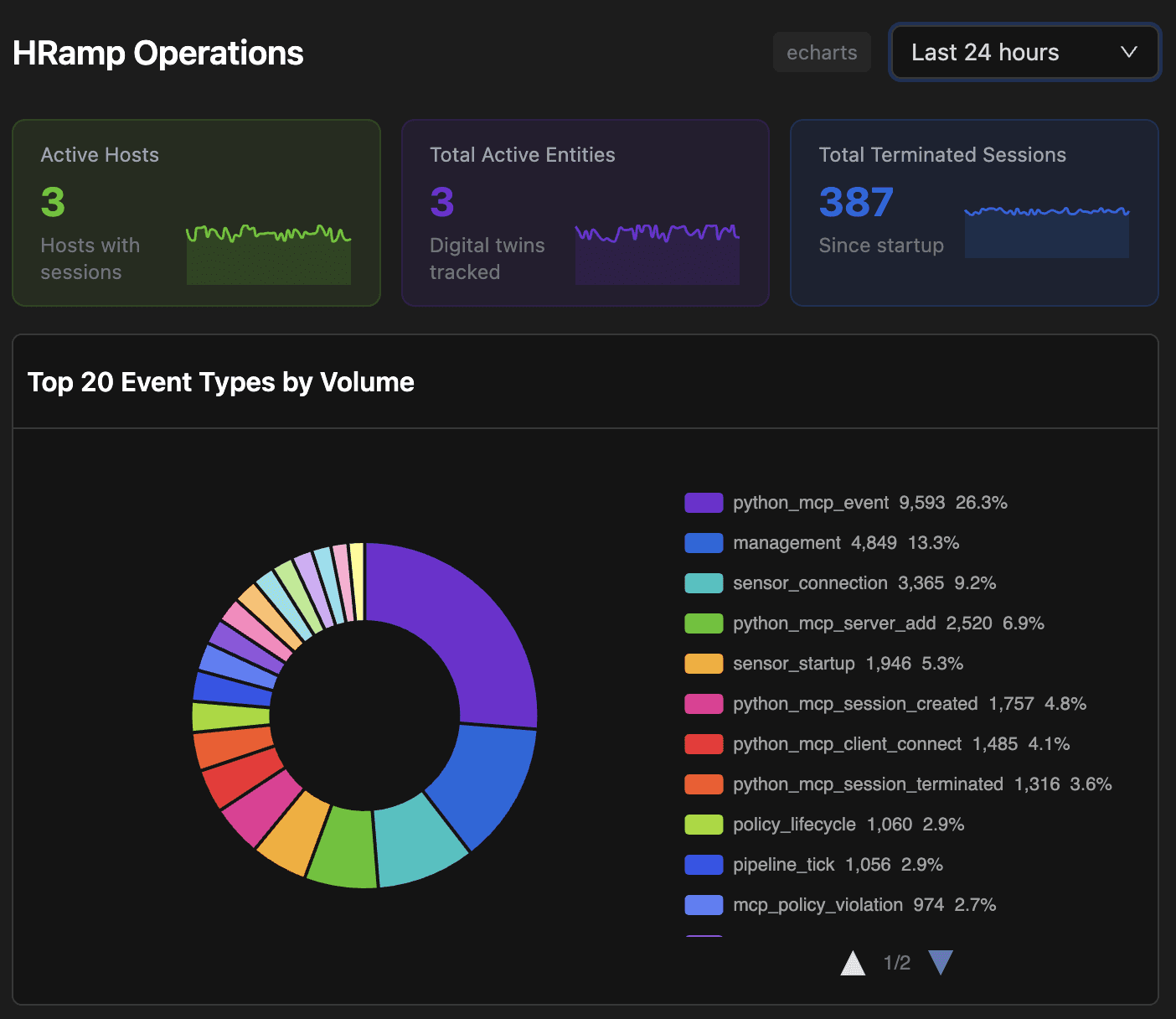
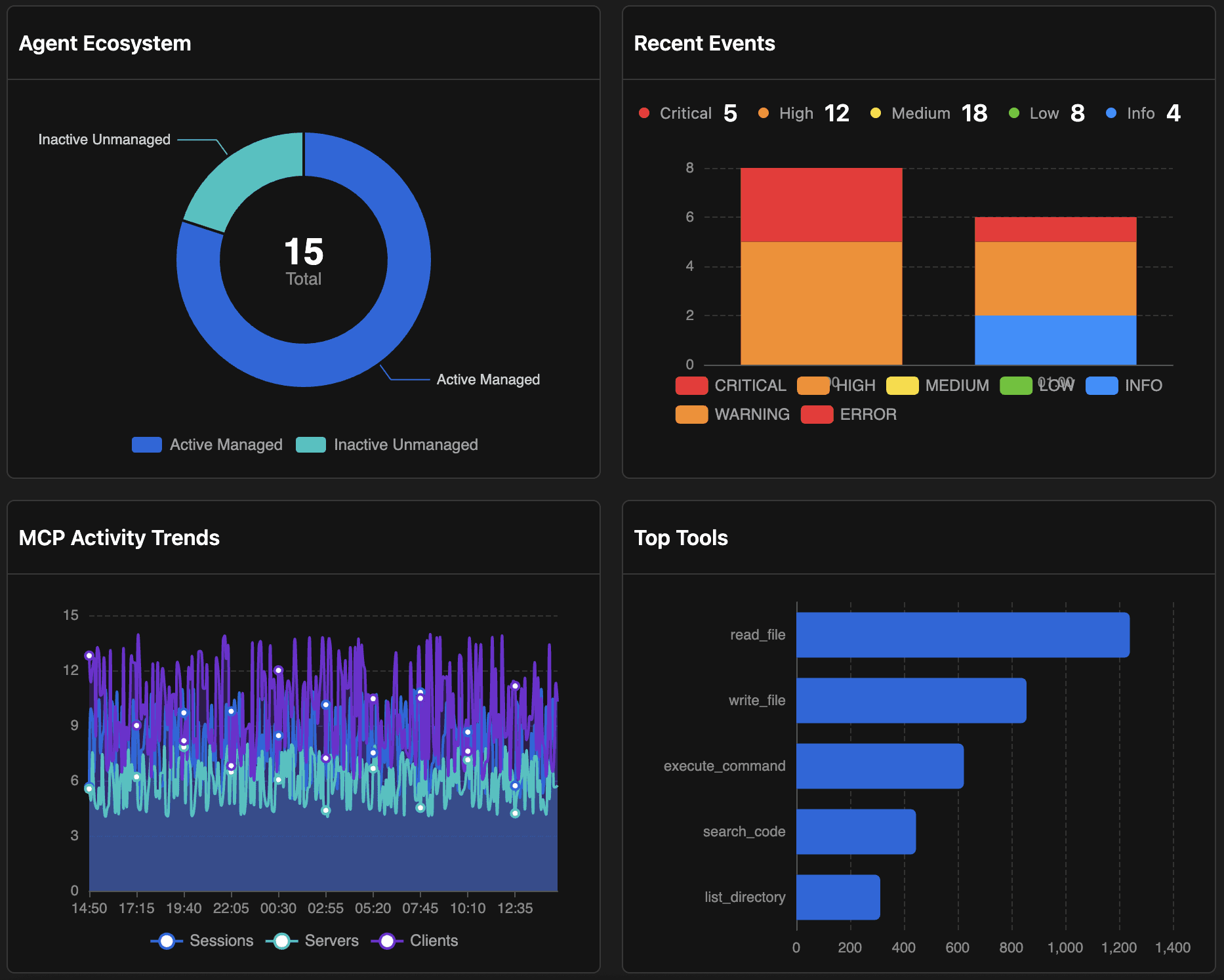
The Trust Context Engine provides the continuous contextual intelligence required to understand and control agentic systems. It continuously captures and attaches identifiers, trust signals, and capability metadata to activity across the Agentic Action Path.

How It Works
The Trust Context Engine continuously captures and enriches the signals needed to understand and control how agent behavior unfolds across agents, tools, MCP servers, and connected infrastructure. This includes:
agent identifiers
tool capability intelligence
ownership metadata
trust attributes from the Agentic Trust Registry
runtime execution telemetry

Trust Context is powered by two sources: curated MCP trust data from the MCP Trust Registry and real-time execution signals captured by BlueRock sensors. These signals are correlated in real-time and attached to each step of the Agentic Action Path.
As agents interact with tools and MCP servers, BlueRock combines known component attributes with observed runtime behavior to create Trust Context for each interaction.
That Trust Context uniquely powers both Agentic Observability and Context-Powered Guardrails, helping teams understand execution, guide decisions, and safely operate agentic workflows in production.
Common Questions
Why Trust Context Engine matters for operating agents in production.
What is the Trust Context Engine and what problem does it solve?
The Trust Context Engine provides the identity, capability, and trust intelligence that agentic systems need to operate safely in production. Because agents generate behavior dynamically at runtime — selecting tools, invoking MCP servers, and triggering downstream actions — the context needed to understand and govern that behavior rarely travels with execution. The Trust Context Engine continuously enriches the Agentic Action Path with that missing context.
How does the Trust Context Engine differ from standard logging or tracing?
Logs and traces show that actions occurred — but they don't capture which agent initiated them, what capabilities were invoked, or how execution propagated across systems. The Trust Context Engine attaches structured identifiers, capability metadata, and trust signals to every step of execution, giving teams the context needed to interpret and govern behavior — not just observe it.
Where does the trust intelligence come from?
The Trust Context Engine is continuously enriched by the MCP Trust Registry, which provides structured trust intelligence about MCP servers and tools across the ecosystem — including ownership verification, capability exposure, and operational posture. This allows organizations to evaluate which systems agents can safely interact with before and during execution.
How does this integrate into the development workflow without slowing teams down?
The Trust Context Engine integrates directly into CI/CD pipelines, allowing teams to classify tools, attach trust metadata, and establish governance signals during build and deployment. Developers can move quickly with confidence that trusted context is already in place before agents reach production systems — without requiring manual review at runtime.
What other BlueRock capabilities does the Trust Context Engine power?
It serves as the foundational context layer for both Observability and Guardrails. Observability uses trust context to surface the agents, tools, and interactions that actually shaped execution — rather than requiring teams to sort through raw telemetry. Guardrails use the same context to make precise, real-time enforcement decisions based on agent identity, tool capabilities, and MCP server trust posture.